
A bathroom renovation is one of the most personal remodeling projects you'll undertake. Unlike kitchens — which are largely about function and flow — bathrooms are about how you start and end every day. Getting it right means thinking carefully about how you actually use the space, what frustrates you now, and what kind of experience you want every time you walk in.
This guide walks you through the key decisions you'll face, in the order you should face them.
Start with the Layout, Not the Finishes
It's tempting to start a bathroom renovation by picking tile you love on Pinterest. But layout decisions come first — because they determine everything else. Moving plumbing is expensive. Moving walls is even more expensive. The more you can accomplish within the existing footprint, the further your budget goes.
Walk through your bathroom and ask: Does the door swing into anything? Is there enough clearance in front of the toilet and vanity? Does the shower feel claustrophobically small? Can two people use the space at the same time comfortably? These functional questions should drive your layout decisions before aesthetics enter the picture.
Important: If you're thinking about expanding into an adjacent closet or reconfiguring the floor plan, get a professional assessment early. Structural surprises — like load-bearing walls or pipes in unexpected places — can significantly change your budget and timeline.
Set a Realistic Budget Before You Fall in Love with Anything
Bathroom renovations in the Triangle range from around $15,000 for a simple refresh to $60,000 or more for a full primary suite remodel with all the details. The gap is wide because the variables are enormous: tile choices alone can vary from $3 per square foot to $30 or more. A freestanding soaking tub can cost anywhere from $800 to $8,000.
Before you start selecting materials, establish a clear budget range and share it with your contractor. A good remodeling team will help you understand where to invest for maximum impact and where to save without sacrificing quality.
Choose Your Tile Thoughtfully
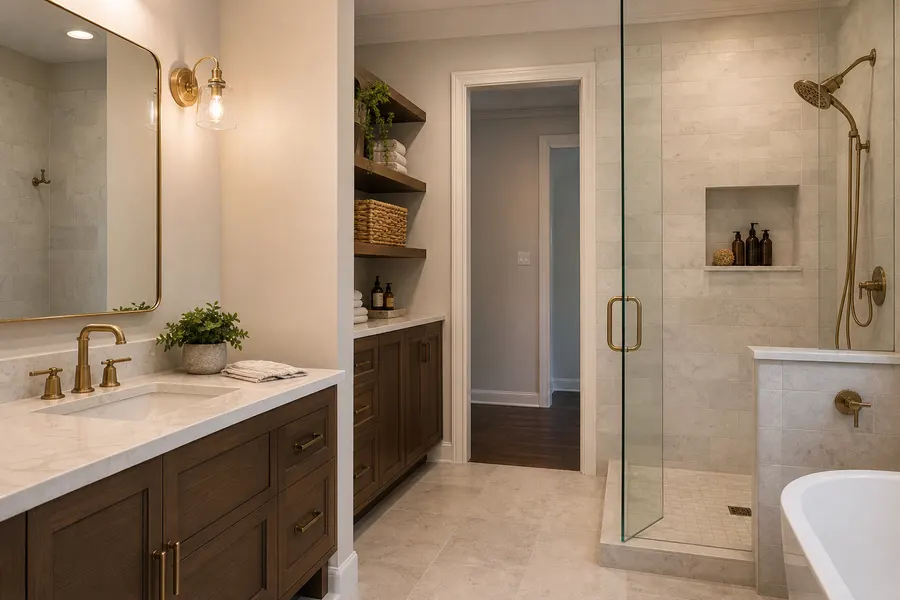
Tile is the single biggest visual driver in a bathroom. It sets the mood, defines the style, and determines how the space feels from the moment you walk in. But tile is also one of the easiest places to go over budget quickly — especially when you add specialty sizes, patterns, or natural stone.
A few principles that help:
- Use your most expensive tile as an accent rather than field coverage — save it for the shower niche, a feature wall, or a herringbone floor strip.
- Large format tiles (12×24 or bigger) make small bathrooms feel larger and require fewer grout lines to clean.
- Matte finishes are on trend and beautifully textured, but they can show soap residue more than polished or satin finishes.
- Grout color matters as much as tile color. White grout in a shower is a maintenance commitment. Matching grout-to-tile minimizes the visual impact of grout lines.
Think About Lighting Early — Not Last
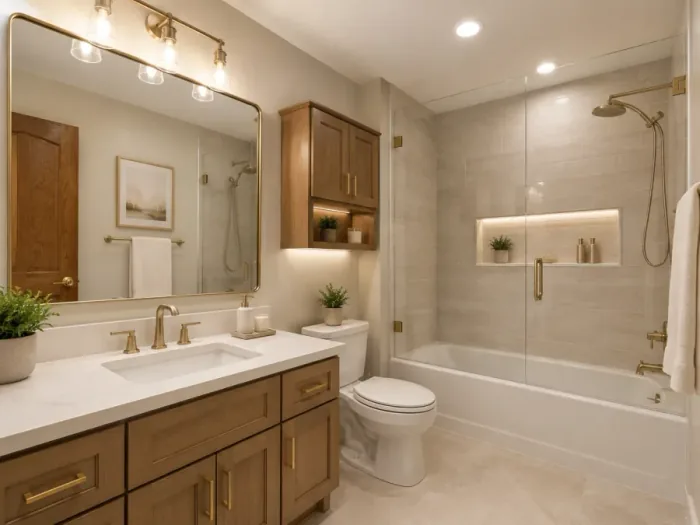
Bathroom lighting is almost always an afterthought. It shouldn't be. Poor lighting in a bathroom affects everything — how you apply makeup, how you shave, how the tile and fixtures photograph, and how the room feels at different times of day.
The most functional bathrooms layer light: general ambient light from a ceiling fixture or recessed cans, task light at the vanity mirror (ideally at face height on both sides, not just overhead), and accent or decorative lighting if budget allows. A smart dimmer on the main fixture makes the space work from a bright morning routine to a relaxing evening soak.
Ventilation Is Not Optional
An improperly ventilated bathroom will develop mold problems no matter how beautiful the tile is. If your current fan sounds like a jet engine or runs and leaves condensation on every surface anyway, plan for a ventilation upgrade as part of your renovation.
Modern exhaust fans are whisper-quiet and can include built-in humidity sensors that run automatically when moisture levels rise — eliminating the classic problem of people forgetting to run the fan. It's a modest addition to the budget with a significant long-term payoff.
Don't Forget the Details
Hardware, mirrors, towel bars, toilet paper holders, hooks — these small details make an enormous difference in how finished and intentional a bathroom feels. The mistake most people make is treating them as afterthoughts. Choose them as part of the design, not after the design is done.
Pick a single finish family and stick with it. Mixing brushed nickel and chrome looks like a mistake. Mixing matte black and unlacquered brass looks deliberate and editorial — because it is.
"The difference between a bathroom that feels luxurious and one that just looks expensive is usually attention to detail — the things you touch every day."
What to Expect from the Process
A typical full bathroom renovation takes three to five weeks from demo to completion, depending on scope. Here's a rough sequence: demo and rough-in plumbing and electrical, cement board and waterproofing, tile, fixtures and vanity, finishes. Your contractor should give you a clear schedule before work begins — and should communicate proactively if anything changes.
If you're thinking about a bathroom renovation in the Triangle, Cedarline Kitchen & Home would love to walk you through the process. We handle everything from the first layout conversation to the final walkthrough — so you can focus on choosing what you love, not managing what you don't.