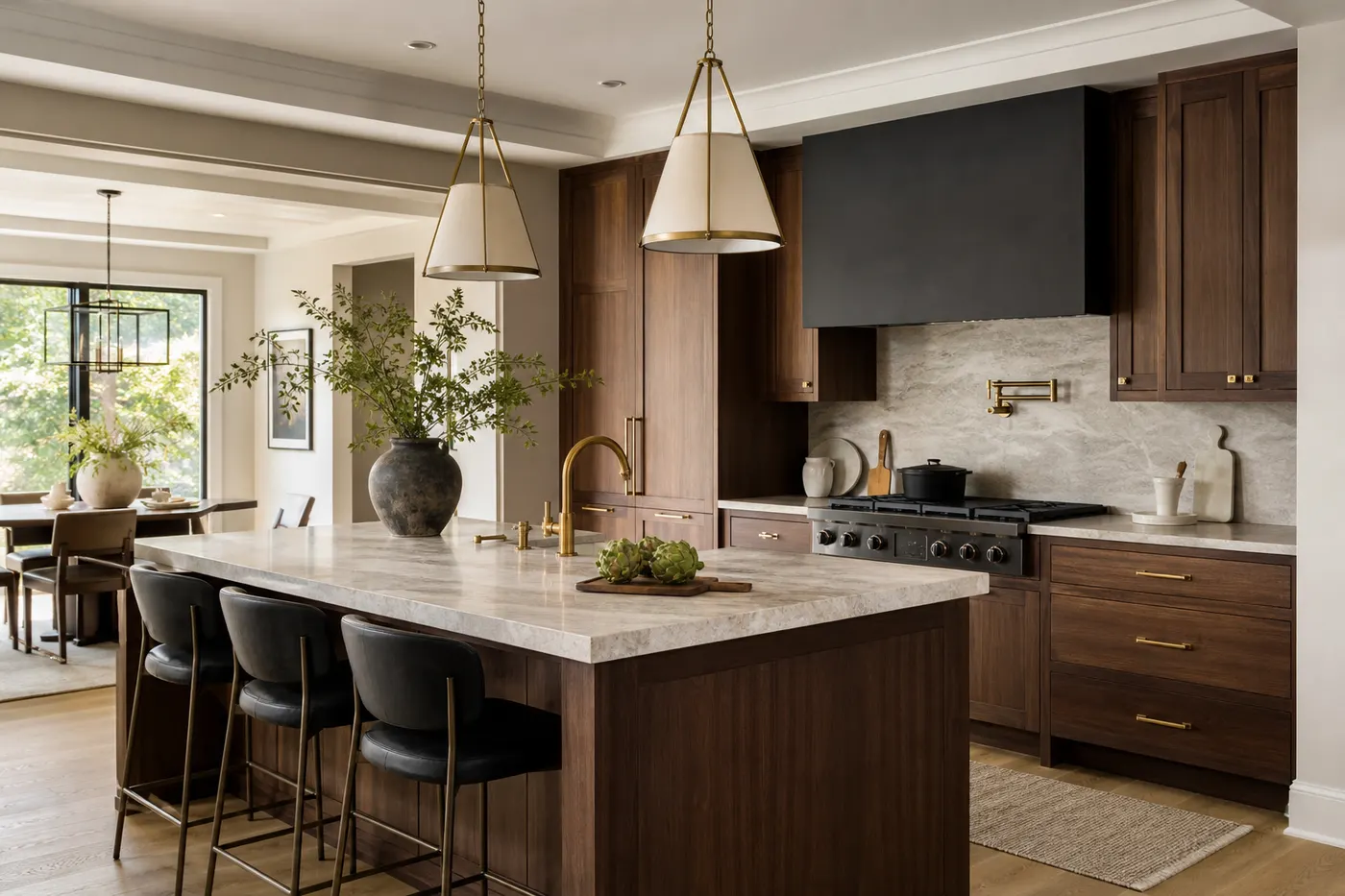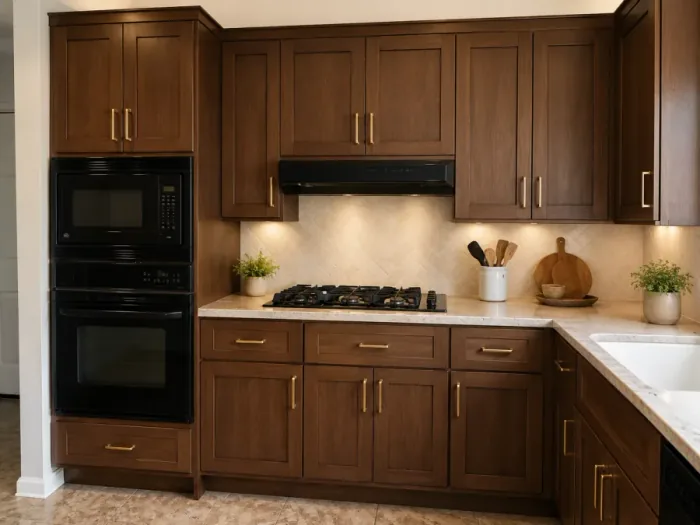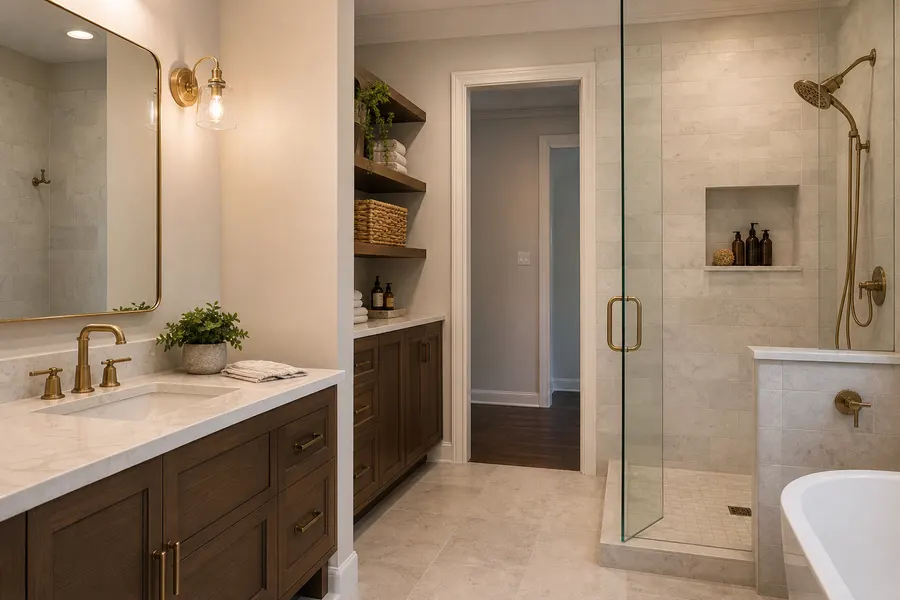

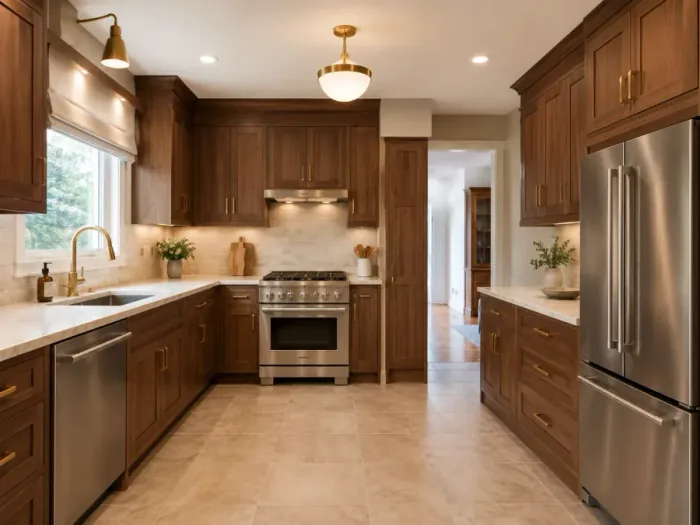
The countertop question is one we hear constantly. Quartz, granite, marble — what's actually the difference, which one lasts, and how do you choose? The honest answer is that all three are excellent options in the right context, but each has meaningful tradeoffs that affect how well it works for your specific household. Here's the breakdown.
Quartz: The Practical Choice
Engineered quartz (brands like Silestone, Cambria, and Caesarstone) is made from approximately 90–95% ground natural quartz bound with polymer resins. It looks like natural stone, but unlike granite or marble, it's non-porous — meaning it doesn't require sealing and is highly resistant to staining from wine, coffee, oil, and acidic foods.
The case for quartz:
- No sealing required — ever
- Extremely consistent appearance (helpful for large kitchens with multiple slabs)
- Wide color and pattern range, including options that convincingly mimic marble
- Very hard and durable under daily use
- Backed by manufacturer warranties (typically 10–15 years)
The tradeoffs:
- Not heat-resistant — hot pans can damage the resin binders. Always use trivets.
- Can look slightly "artificial" compared to natural stone, especially in direct light
- Outdoor use isn't recommended — UV exposure can cause discoloration
Best for: Active family kitchens, homeowners who want low maintenance, and anyone who wants a consistent look across a large surface area. Quartz is the most forgiving countertop material in daily use.
Granite: The Natural Classic
Granite is an igneous natural stone quarried from around the world. Because each slab is unique, no two granite countertops are exactly alike — which is either a feature or a challenge depending on how you look at it. Granite has been the dominant premium countertop material for decades, and for good reason.
The case for granite:
- Completely natural — no resins or binding agents
- Unique character in every slab
- Extremely heat-resistant — hot pans won't damage it
- Very hard and scratch-resistant
- Generally less expensive than premium quartz or marble
The tradeoffs:
- Requires annual sealing to maintain stain resistance
- More variable appearance can make matching across seams tricky
- Some granites have natural fissures or inclusions that concern some homeowners (though these are cosmetic, not structural)
Marble: The Beautiful High-Maintenance Choice
Marble is a metamorphic limestone with a soft, luminous quality that no other material can fully replicate. The white-and-grey veining of Carrara marble, the dramatic movement of Calacatta, the warm tones of Crema Marfil — these look incredible in kitchen photography. And in person. There's a reason marble has been prized for thousands of years.
But marble demands respect. It's porous. It etches — meaning acidic substances like lemon juice, vinegar, wine, and tomatoes leave dull marks on the surface, not just stains. These etches aren't just surface-level; they're actually a chemical reaction that slightly dissolves the stone surface. They can be polished out, but they return with use.
The case for marble:
- Unmatched natural beauty — the real thing has a depth and warmth that engineered alternatives can't match
- Cool surface temperature — ideal for pastry and baking work
- Ages gracefully — the patina that develops over time has its own character
The tradeoffs:
- Etches from acidic foods and drinks — this is not an "if," it's a "when"
- Requires sealing and more careful daily maintenance
- Higher cost than granite for comparable slabs
- Not ideal for households with young children or high-volume cooking
"Marble in a kitchen is a lifestyle choice. If you can accept that it will show signs of life and love that with time — go for it. If a ring from a lemon slice will ruin your day, choose quartz."
What About Quartzite?
Quartzite is a natural metamorphic stone that's often confused with quartz (engineered) or marble, but it's its own category. It has the organic look and feel of marble but is significantly harder and more resistant to etching. It still requires sealing, but it's a more practical choice for homeowners who want a natural, marble-like appearance with better durability. True quartzite (not quartzite-labeled marble) is an excellent option worth considering.
The Bottom Line
If low maintenance and durability are your priorities — choose quartz. If you want natural stone character and can commit to annual sealing — choose granite. If beauty matters more than practicality and you accept its quirks — consider marble or quartzite. All four are quality choices. The right one depends on how you live in your kitchen.
At Cedarline Kitchen & Home, we carry and install all of these materials and can walk you through physical samples in your space. There's no substitute for seeing a slab in your actual kitchen light before you commit.